In an age where technology and precision are paramount, the evolution of measurement techniques has become crucial across various sectors, including laboratories, industrial settings, scientific research and medical applications.
Among the remarkable advancements in this field is the development of multi-channel fibre optic probes. These innovative probes open new doors for measurements, enabling professionals to gather comprehensive data with enhanced accuracy and efficiency using single probes capable of using multiple measuring techniques. This blog will explore the principles behind these probes, their applications across various industries, and the advantages they offer.
Understanding Fibre Optic Probes
Fibre optic probes are devices that utilise the unique properties of optical fibres to measure various parameters such as temperature, pressure, chemical concentration and more. By converting physical properties into optical signals these probes allow for remote sensing and measurement, making them indispensable in environments where using traditional measurement sensors would be challenging or impossible.
Single Fibre Optic Probes
Single fibre optic probes involve a single optical fibre that transmits light to a sample and then collects the return for analysis. The simplicity of these probes offers numerous applications; however, they are often limited to measuring one parameter at a time. To overcome this limitation researchers and engineers have developed more sophisticated designs, specifically, single fibre optic probes that contain multiple fibre channels.
What Are Multi-Channel Fibre Optic Probes?
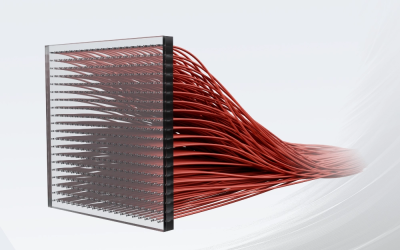
Multi-channel fibre optic probes consist of several individual optical fibres arranged together in a bundle, allowing them to function as a single probe with enhanced capabilities. Each fibre within the bundle can be dedicated to measuring a specific parameter or transmitting different wavelengths of light to analyse multiple aspects of a sample simultaneously. This design makes it possible to gather a variety of data points from a single location, using different techniques, thereby streamlining measurement processes.
Applications of Multi-Channel Fibre Optic Probes
Laboratory Applications
In laboratory settings, precision measurements are critical for experimental accuracy and reproducibility. Multi-channel fibre optic probes are invaluable in various lab applications:
- Chemical Analysis: Scientists can utilise fibre optic probes to measure concentrations of specific compounds through absorbance or fluorescence spectroscopy. By using multiple fibre bundles within the same probe, labs can analyse multiple analytes simultaneously, leading to comprehensive data without the need for multiple sampling points.
- Environmental Monitoring: Probes can be deployed in the field to monitor environmental conditions, such as pollutants in water or air quality. The versatility of multi-channel probes allows for concurrent measurement of various contaminants, pH levels and environmental parameters, providing a holistic view of environmental health.
- Biochemical Studies: In biochemistry detecting and quantifying biomolecules is essential. The simultaneous detection of different biomolecules can be achieved using multi-channel fibre optic probes, enabling researchers to explore complex interactions in biological systems more effectively.
Industrial Applications
In industrial settings, maintaining optimal processes and ensuring safety is paramount. Multi-channel fibre optic probes can greatly enhance industrial monitoring and control.
- Process Control: In chemical manufacturing plants the ability to monitor multiple critical parameters such as temperature, pressure and chemical concentrations in real-time helps streamline processes and maintain optimal production conditions. Multi-channel fibre optic probes can deliver these metrics simultaneously, allowing for efficient adjustments on the fly.
- Structural Monitoring: In the construction and infrastructure sectors fibre optic probes can be utilised for the monitoring of structural health. By measuring parameters such as strain, temperature and vibration, companies can ensure the integrity and safety of structures over time. Multi-channel probes allow for a more comprehensive understanding of the structural response to various conditions.
- Oil and Gas Industry: In oilfields fibre optic probes can be deployed down wells to monitor reservoir conditions. Utilising multi-channel fibre optic probes allows operators to measure temperature, pressure and chemical composition during extraction, improving decision-making and enhancing yield.
Scientific Research Applications
The ability to conduct sophisticated experiments and gather data efficiently is essential for scientific research. Multi-channel fibre optic probes are making significant contributions to scientific endeavours.
- Materials Science: Researchers can investigate new materials by measuring their optical properties, thermal characteristics and structural integrity simultaneously. This multifaceted information accelerates material development and characterisation.
- Medical Research: In the realm of medical research fibre optic probes can be employed for monitoring tissue conditions, including temperature and chemical markers related to disease. The capacity to gather multiple data points from a single probe enhances the potential for early diagnosis and treatment response monitoring.
Medical Applications
In medical applications precision and reliability are crucial. Multi-channel fibre optic probes are proving to be game changers in various medical settings.
- In Vivo Monitoring: Intraoperative monitoring during surgeries is vital. Fibre optic probes can be inserted into body cavities to measure various parameters such as temperature and pH levels in real time. Multi-channel fibre optic probes allow for a comprehensive assessment without multiple probe insertions, reducing patient risk and improving safety.
- Point-of-care testing: Point-of-care testing (POCT) has transformed diagnostics, enabling clinicians to conduct tests at the site of patient care rather than relying solely on centralised laboratories. Multi-channel fibre optic probes enhance this approach by delivering rapid and reliable results.
- Spectroscopic Analysis of Tissues: In the field of oncology, detecting cancer biomarkers in tissues is critical for effective treatment. Fibre optic probes can simultaneously assess various molecular signatures within a tissue sample, aiding in the identification of malignant changes more promptly and accurately than traditional methods.
- Monitoring Drug Delivery: The integration of multi-channel fibre optic probes can play a crucial role in monitoring the efficacy and distribution of drug delivery systems. By measuring local concentrations of therapeutic agents and their biochemical effects, healthcare providers can adjust treatment plans more dynamically.
Advantages of Multi-Channel Fibre Optic Probes
The incorporation of multi-channel fibre optic probes brings a host of advantages that enhance measurement capabilities across laboratory, industrial, scientific, and medical applications.
1. Increased Measurement Capabilities
The most apparent advantage of multi-channel fibre optic probes is the ability to measure multiple parameters simultaneously. This capability is particularly beneficial in scenarios where complex interactions occur, such as in biochemical reactions or industrial processes.
By utilising multi-channel fibre optic probes, operators can gather data on several variables without the need for additional equipment or repeated sampling. This comprehensive approach enhances the accuracy of results and reduces the time needed to complete analyses.
2. Improved Efficiency and Time Savings
With the capability to perform multiple measurements through a single probe, laboratories, industries, and medical facilities can significantly improve efficiency. Instead of investing time in manual sampling and waiting for analytical results, often taking hours to days, users can rely on continuous real-time monitoring to make timely decisions.
The reduction in sampling frequency and associated labour leads to enhanced throughput, allowing teams to dedicate more time to critical analysis and decision-making.
3. Cost-Effectiveness
While the initial investment in multi-channel fibre optic probes may be higher than traditional measurement devices, the long-term cost benefits are substantial. By reducing the need for various sensors, labour and laboratory analysis, organisations can minimise their operating costs significantly. Coupled with the potential for improved yield in industrial processes and the rapid detection of anomalies in medical settings, these probes deliver significant financial returns over time.
4. Enhanced Data Quality and Reliability
Data quality is paramount in any measurement application. The inherent precision of fibre optic technology reduces measurement uncertainty and enhances signal quality. By utilising multi-channel fibre optic probes users can cross-validate results for accuracy, improving the overall reliability of the data collected.
Additionally, the use of continuous monitoring strategies reduces variability and inconsistency associated with manual sample handling, leading to more dependable results.
5. Flexibility and Customisation
Multi-channel fibre optic probes can be tailored to specific applications. The design of the probes can be customised according to the specific measurement needs of an application, including the wavelengths to be analysed, the type of measurement technique to be used and even the environment in which the probes will operate.
This flexibility makes them suitable for a wide range of industries, including pharmaceuticals, food and beverage, environmental monitoring, medical and beyond. Researchers can adapt to emerging demands and explore new applications without the need for extensive redesign.
6. Safety and Reduced Risk of Contamination
In settings such as hospitals and laboratories minimising contamination risks is imperative. Using a multi-channel fibre optic probe to measure multiple parameters locally reduces the need for multiple insertions or sampling procedures, thereby minimising the risk of introducing contaminants into sensitive environments.
In industrial applications where hazardous materials may be present, the ability to conduct remote measurements ensures that personnel remain safe while still gathering crucial data.
7. Miniaturisation and Portability
As echnology advances the ability to miniaturise sensing equipment enables greater portability and ease of use. Multi-channel fibre optic probes can be designed to be compact and lightweight, making them ideal for fieldwork and point-of-care testing.
This portability enables professionals to conduct critical measurements in remote locations or dynamic environments where traditional laboratory instruments would be impractical.
Future Prospects of Fibre Optic Probes in Measurement Technologies
Looking ahead, the prospects for multi-channel fibre optic probes include a range of exciting developments. Advances in materials science, sensor technology and data analysis techniques promise to enhance the capabilities of these probes further.
1. Integration with IoT and Smart Technologies
As industries increasingly adopt the Internet of Things (IoT), integrating fibre optic probes with smart technologies provides opportunities for enhanced monitoring and reporting capabilities. By connecting fibre optic sensors to IoT platforms, real-time data collected from single probes can be transmitted to cloud-based systems for analytics, remote monitoring and predictive maintenance.
This integration will significantly improve operational efficiencies in industries where timely data analysis is essential, such as manufacturing, healthcare and agriculture.
2. Enhanced Fibre Material Development
The advancement in fibre materials, including photonic crystal fibres and specialty fibres that are sensitive to specific environmental variables, will enhance the performance of fibre optic probes. These materials could help in overcoming current limitations such as sensitivity, wavelength range and environmental robustness.
Furthermore, the emergence of new dopants and coating technologies could lead to fibres that can measure additional parameters, broadening the functionality of multi-channel fibre optic probes even further.
3. Machine Learning and Data Analytics
The combination of fibre optic measurements and the rise of machine learning algorithms could change the landscape of how data collected from these probes is analysed and understood. Advanced algorithms could identify patterns within the data, enabling real-time insight generation and more sophisticated predictive analytics.
This shift will not only enhance data interpretation but also lead to intelligent systems capable of making automated adjustments in processes based on measurements. Such systems could be particularly transformative in industries where rapid changes in conditions are common.
4. Miniaturisation for Implantable Medical Devices
In medical applications, the possibility of miniaturising single fibre optic probes to be used in implantable devices opens new frontiers for patient monitoring. These devices could monitor vital signs and biochemical parameters in real-time, offering physicians critical insights without the need for invasive procedures or extensive lab work.
As technology continues to advance the potential for in-situ measurements directly from within the human body could revolutionise personalised medicine, allowing for tailored treatment plans based on live data.
Case Studies Highlighting Success
Numerous case studies exemplify how multi-channel fibre optic probes have enhanced measurement processes across different sectors.
- Pharmaceutical Production: A major pharmaceutical company adopted multi-channel fibre optic probes to monitor culture conditions in its bioreactors. By measuring temperature, pH and dissolved oxygen levels simultaneously the company could maintain optimal conditions for cell growth, significantly improving yields and reducing batch failures.
- Environmental Monitoring: A research team used multi-channel fibre optic probes to assess water quality in a river basin affected by industrial runoff. By simultaneously measuring turbidity, chemical oxygen demand (COD) and specific ion concentrations, the team could provide real-time data to regulatory bodies, ultimately leading to prompt action in mitigating water pollution.
- Clinical Diagnostics: A hospital integrated fibre optic probes into its operating rooms to monitor intraoperative conditions. Probes were able to measure oxygen levels and temperature within surgical sites, providing surgeons with real-time data to ensure patient safety and optimal surgical outcomes.
Conclusion: Embracing the Future of Measurement
Multi-channel fibre optic probes signify a remarkable leap forward in measurement technology across various fields. Their adaptability, precision and efficiency make them invaluable across various sectors, from laboratory analysis to industrial processes, scientific research and medical diagnostics.
The advantage of employing such probes is the ability to simultaneously monitor multiple parameters in real-time, not only enhancing measurement capabilities, but also improving efficiency, data quality and safety. As technology continues to advance and as industries seek ever greater efficiency and effectiveness the role of fibre optic probes will only expand.
In embracing the future of measurement, organisations that leverage these innovative technologies stand to experience not only operational improvements but also enhancements in data driven decision making, research breakthroughs and ultimately, better outcomes across the board. The evolution of fibre optic technology and its application in multi-channel fibre optic probes is truly set to transform the landscape of measurement for years to come, reinforcing the importance of precision and adaptability in today’s ever-evolving world.
In a world increasingly defined by the quality of data we collect and how we leverage it, the use of multi-channel fibre optic probes will not only facilitate unprecedented measurements but also inspire novel solutions for the challenges faced across multiple domains. The time to embrace this technology and harness its potential for transformative impact is now.