The Pulse of the Process: How Spectroscopy Probes are Revolutionizing Real-Time Chemical Analysis
As a field, chemical analysis is shedding its “benchtop” skin, transitioning from a centralized, slow, and expensive processes toward decentralized, instantaneous and integrated solutions.
In 2026, the catalyst for this change is the optical fiber spectroscopy probe.
No longer just a laboratory accessory, these probes have become the sensory organs of the modern smart factory and medical theatre.
By bringing the “lab to the sample” rather than the “sample to the lab,” we are achieving a level of process transparency that was scientifically impossible a decade ago. In 2026, the catalyst for this change is the optical fiber spectroscopy probe. No longer just a laboratory accessory, these probes have become the sensory organs of the modern smart factory and medical theatre. By bringing the “lab to the sample” rather than the “sample to the lab,” we are achieving a level of process transparency that was scientifically impossible a decade ago.
The Engineering Shift: From Discrete Sampling to Continuous Flow
Traditional chemical analysis is a “stop-and-go” operation. You take a sample from a reactor, stabilize it, transport it to a GC-MS (Gas Chromatography-Mass Spectrometry) or HPLC (High-Performance Liquid Chromatography) unit, and wait. By the time you have results, the batch has moved on.
The sample may have been contaminated at the point it was taken or degraded during transportation. One thing is for certain; the sample is highly unlikely to be the same as when it was taken.
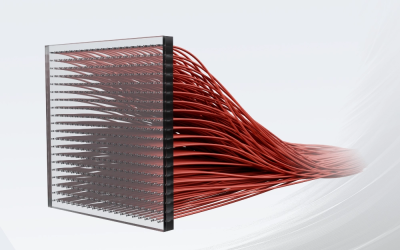
Spectroscopy probes—utilizing Raman, NIR (Near-Infrared), or ATR (Attenuated Total Reflection)—solve this by providing a window into the molecular state in real-time.
Raman Probes: The Molecular Fingerprint
Raman spectroscopy is perhaps the most revolutionary tool in our current arsenal. By measuring the inelastic scattering of monochromatic light, we can identify specific molecular bonds without any sample preparation.
The Engineering Advantage: Raman probes provide highly specific molecular identification in real time without requiring direct sample extraction or extensive preparation. Because water produces only weak Raman interference this techniques is particularly effective in aqueous environments. Additional advantages include: non-destructive analysis within the process stream, simultaneous identification of multiple chemicals, high chemical specificity through molecular “fingerprinting” and real-time process control and reaction endpoint detection. Raman spectroscopy is especially valuable in pharmaceutical manufacturing, chemical processing, biotechnology, and hazardous process environments where continuous molecular-level insight is critical.
The Engineering Challenge: Raman signals are notoriously weak (1 Raman scattered photon for every 10 to 100 million incident photons). This requires high-power, ultra-stable laser sources and probes with sophisticated internal filtering (narrow band-pass and long-pass filters) to suppress Rayleigh scattering.
NIR (Near-Infrared) Probes: Fast Process Insight at Scale
NIR spectroscopy measures absorption of near infrared light by molecular overtones and combination vibrations. This method is exceptionally useful for rapid quantitative analysis.
The Engineering Advantage: High-speed, continuous measurement, deep optical penetration into many materials and minimal sample preparation. This gives excellent suitability for inline and online process control. NIR techniques are particularly effective for monitoring moisture content, concentration/dilution, blend uniformity, fermentation, food & pharmaceutical production, polymer & petrochemical manufacturing.
The Engineering Challenge: The challenge lies less in signal strength and more in data interpretation. NIR spectra often contain broad, overlapping absorption features that require advanced chemometric modelling and calibration techniques to extract meaningful process information.
As a result, successful NIR deployment depends heavily on robust calibration, stable process conditions, temperature compensation and advanced multivariate analysis algorithms. NIR remains one of the most widely adopted spectroscopic technologies in industrial automation. It delivers rapid, non-destructive measurements with exceptional reliability in continuous processing environments.
ATR (Attenuated Total Reflection) Probes
For highly absorbent or opaque liquids—think sludge, crude oil, or dense pharmaceutical slurries—standard transmission spectroscopy fails. ATR probes utilize the “evanescent wave” that penetrates just a few microns into the sample from a high-refractive-index crystal (like Diamond or Sapphire).
The Engineering Advantage
ATR probes are exceptionally effective in challenging process environments because the measurement occurs only at the surface interface of the crystal. This enables:
- Reliable analysis of opaque, viscous, or particle-heavy media
- Minimal sample preparation
- High chemical resistance in aggressive process conditions
- Reduced sensitivity to optical scattering and turbidity
- Robust inline monitoring without interrupting production flow
Because the penetration depth is extremely shallow, ATR systems can often maintain stable measurements even when conventional optical transmission methods become unusable.
The Engineering Challenge
The primary engineering challenge with ATR systems lies in maintaining long-term optical integrity at the probe interface. Since the measurement depends on direct interaction between the sample and the crystal surface, issues such as:
- Fouling
- Coating buildup
- Crystal abrasion
- Thermal stress
- Chemical attack
can significantly affect measurement accuracy and probe lifespan.
Probe materials therefore require careful selection, with Diamond, Sapphire, Zinc Selenide, or Germanium crystals chosen based on chemical compatibility, pressure resistance, and spectral performance. In industrial environments, effective sealing, temperature management, and cleanability are also critical to ensuring reliable long-term operation.Application: Ideal for reaction monitoring where the chemical environment is harsh and the medium is non-transparent.
Conexa Tech Solutions: Leading the Fiber Revolution
At Conexa Tech Solutions, we’ve built our reputation on the “end-to-end” philosophy. We understand that a spectroscopy probe is only as good as the infrastructure supporting it. Our capabilities in the Medical and Industrial fiber sectors are designed to meet the extreme demands of 2026 chemical analysis.
Our Specialised Probe Range:
- ATR Immersion Probes: Our SFP-ATR series features patented designs suitable for lab, pilot plant, and full automated process control. For aggressive chemistry, our SFP-ATR-HE (Harsh Environment) probes are ruggedized to withstand extreme pH and temperature fluctuations.
- Fluorescent Probes: The SFP-FP series utilizes metal-coated fibers to minimize cross-talk, providing the high signal-to-noise ratio required for quantitative fluorescence spectroscopy in clinical settings.
- Bespoke Fiber Bundles: We don’t just provide standard probes; we design and build high-power fiber cables and bundles for broad spectral ranges (from 200nm to 16µm), ensuring that your light source reaches the sample with minimal attenuation.
Cross-Sector Applications: Where the Probes Live
The versatility of the Conexa fiber range allows these probes to thrive in diverse mission-critical environments:
1. Pharmaceutical PAT (Process Analytical Technology)
In the production of biologics, real-time monitoring of glucose, lactate, and cell density is vital. Our fiber probes allow for in-situ monitoring inside bioreactors, ensuring that “Golden Batches” are replicated every time.
2. Medical Diagnostics and In-Vivo Analysis
In the medical sector, we provide Type CF rated components that can be used in direct contact with the heart or bloodstream. Fiber optic spectroscopy is currently revolutionizing “Optical Biopsies,” where a probe can distinguish between cancerous and healthy tissue in real-time during surgery.
3. Agritech and Environmental Monitoring
From measuring nutrient levels in biofloc systems to detecting VOCs (Volatile Organic Compounds) in groundwater, spectroscopy probes provide a non-destructive way to monitor our environment.
The Future: 2026 and Beyond
As we look toward the next five years, the trend is toward Multimodal Sensing. We are no longer looking at just one spectrum; we are integrating Raman, NIR, and Fluorescence into a single, multi-fiber probe head.
Furthermore, at Conexa, we are pairing these optical sensors with our IoT and Power solutions. A spectroscopy probe in a remote location needs more than just a fiber—it needs a stable, low-noise power supply for its laser and a secure IoT gateway to transmit its data to the cloud. We provide the entire “Smart Sensing” ecosystem.
Conclusion
Spectroscopy probes are more than just cables and crystals; they are the key to a more efficient, safer, and more transparent world of chemical manufacturing. By removing the lag time of the laboratory, we enable proactive, rather than reactive, engineering.
Whether you are monitoring a high-pressure chemical synthesis or performing a life-saving medical procedure, Conexa Tech Solutions has the fiber optic expertise to illuminate your data.
Is your process still waiting for lab results?
Explore our Spectroscopy Fiber Probes or contact our engineering team to design a bespoke optical solution for your specific chemical challenge.