The Future of Optical Precision: Why 2D Matrix Fiber Arrays are the New Standard
The demand for high-density optical interconnects and ultra-precise beam shaping has never been higher. From the rapid densification of 5G-Advanced and early 6G networks to the complex requirements of autonomous LiDAR systems, standard linear fiber arrays are no longer enough.
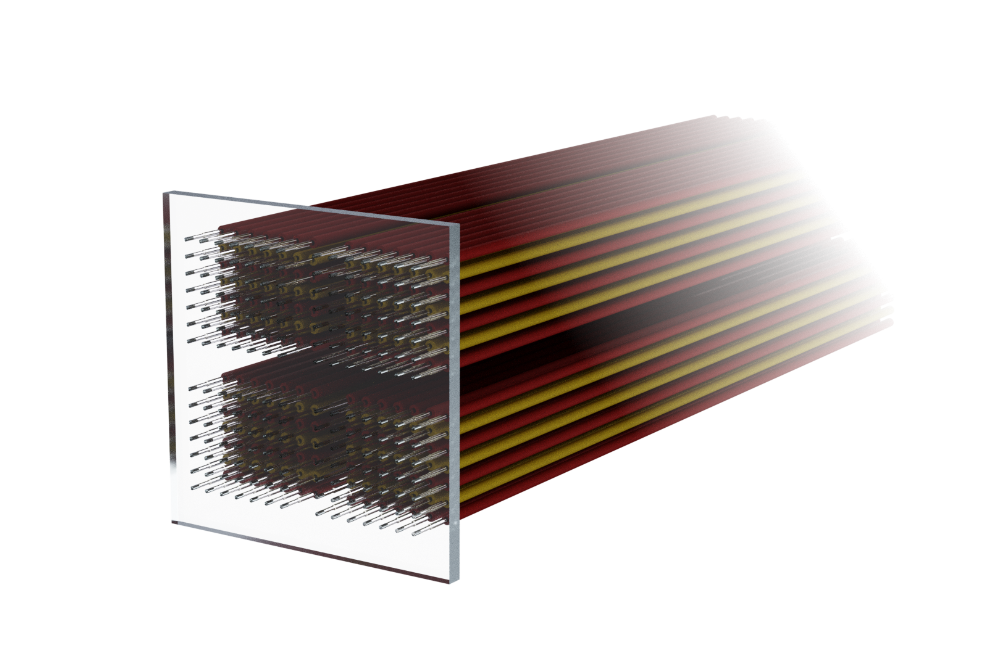
Enter the 2D Matrix Fiber Array. By arranging fibers in a grid (M x N) rather than a single row, these components unlock a new dimension of optical performance.
The Conexa Advantage: Active Alignment and Microlens Integration
The core challenge of any 2D fiber array is pointing accuracy.
Conexa products solves this through Active Alignment.
Sub-0.2° Pointing Accuracy
Minimal angular deviation across the entire matrix.
This level of precision ensures that even over long distances or through complex free-space optical paths, the beam remains perfectly centered on its target without the need for manual recalibration. This extreme stability is what allows for high-efficiency coupling into Photonic Integrated Circuits (PICs) and ensures that in LiDAR applications, the spatial data remains sharp and free from parallax errors.
Minimal Tilt Errors
Critical for applications involving long-distance beam delivery or fiber-to-chip coupling.
By utilising active alignment rather than relying solely on mechanical tolerances, we can compensate for the slight geometrical imperfections inherent in fiber ferrules and microlens substrates. This precise correction ensures that the optical axis of each individual channel is perfectly perpendicular to the array plane, preventing beam “walk-off” and maintaining maximum coupling efficiency across long-distance optical paths.
Customised Microlens Arrays (MLA)
Conexa tailors the MLA based on your specific beam diameter, fiber type (SM, MM, or PM), and operating wavelength (from 850nm to 1550nm+).
Beyond simple collimation, these arrays can be engineered with specific focal lengths and pitch geometries to match the numerical aperture of your system, ensuring maximum power transfer and minimal cross-talk between high-density channels.
High-Growth Industries & SEO Applications
If you are designing for the next generation of technology, 2D matrix arrays are likely at the heart of your system. Here are the primary industries where our solutions are setting the pace:


Customisation without Limits
One of the standout features of the Conexa 2D Matrix Array line-up is the level of “bespoke” engineering available.
Select the tabs below for further details on some of the technical capabilities:
SM, MM (Step/Grin), and PM (Panda)
Square (4×4, 10×10), Hexagonal, or fully custom
Typically < 1 µm core placement
CNC-machined Stainless Steel 304L or custom flanges
E2000, LC, SC, FC, ST, MTP/MPO, and MMC


Summary
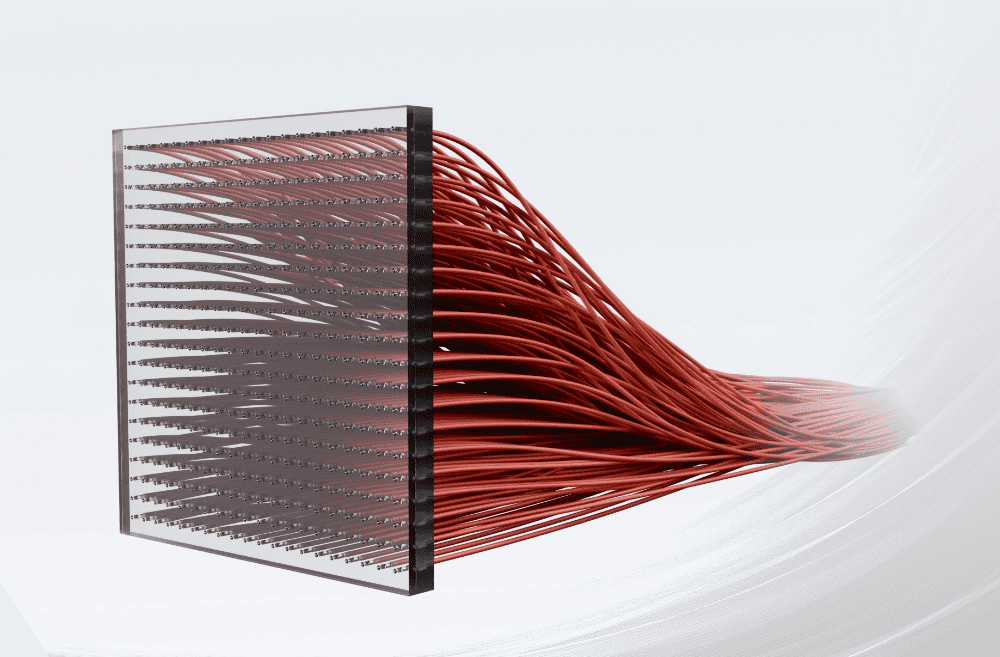
When choosing a 2D Matrix Fiber Array, the “hidden” cost is often the time spent on alignment and integration. By opting for a solution that includes Active MLA Alignment and a Stainless Steel Flange housing, you reduce assembly time and increase the long-term reliability of your optical system.
Your application is unique - your fiber array should be too!
From bespoke matrix geometries to specialised microlens integration, Conexa is here to turn complex optical challenges into high-performance reality.
Download our technical datasheets or contact our team today to discuss your requirements for Active Alignment Microlenses and 2D Collimator Arrays.